A comprehensive new study reveals that Generation Z is fundamentally reshaping workforce priorities, placing job stability ahead of higher pay when making career decisions. The research, conducted across 12 countries and involving over 18,000 respondents aged 18 to 27, found that 73% of Gen Z workers consider long-term employment security more important than salary potential.
The findings challenge conventional assumptions about younger workers being primarily motivated by compensation. Instead, the data paints a picture of a generation shaped by economic uncertainty, pandemic disruption, and witnessing mass layoffs across industries.
This generation watched their parents navigate the 2008 financial crisis and then experienced their own economic upheaval during COVID-19. These formative events have permanently altered their risk calculus when it comes to employment.
Key Findings From the Study
The research, published by the Global Workforce Institute in partnership with Deloitte, identified several defining trends in Gen Z career behavior. Among the most striking: 68% of respondents said they would accept a lower starting salary if the position offered clear pathways for advancement and job security.
Additionally, 61% reported that they had already turned down a higher-paying offer in favor of a role with better stability, benefits, or work-life balance. The median acceptable salary trade-off was approximately 12% below the market rate for comparable positions.
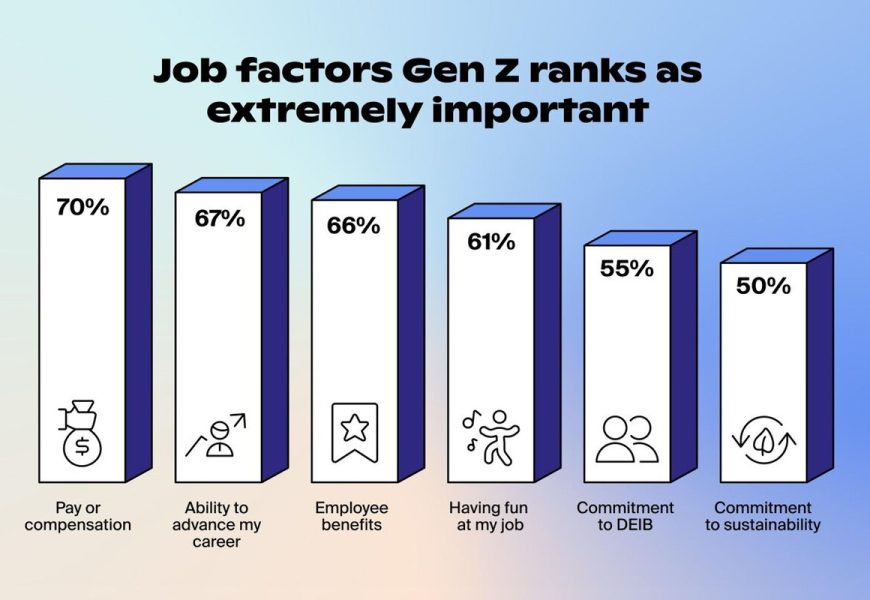
Benefits such as healthcare coverage, retirement contributions, and paid leave ranked higher than base salary in overall importance ratings. Flexible working arrangements also scored strongly, with 57% listing remote or hybrid options as a non-negotiable requirement.
The Economic Context Behind the Shift
Economists point to several structural factors driving this generational preference. The rise of contract and gig work has created a landscape where traditional full-time employment feels increasingly scarce.
For Gen Z, who entered the workforce during or shortly after the pandemic, the experience of sudden job loss is not abstract — it is lived reality.
Student loan debt remains a significant burden, with the average Gen Z borrower carrying $37,000 in educational loans. This financial pressure makes consistent income more valuable than occasional salary bumps at companies with high turnover rates.
Housing affordability crises in major urban centers have further reinforced the need for stable, predictable income streams. When rent consumes 40% or more of monthly earnings, the prospect of a layoff becomes existentially threatening.
How Employers Are Responding
Forward-thinking companies are already adapting their recruitment and retention strategies to align with these preferences. Several Fortune 500 firms have introduced multi-year employment guarantees for entry-level roles, explicitly marketing job security as a core benefit.
Others are investing in robust professional development programs that promise internal promotion pathways. The message is clear: stability does not mean stagnation.
Gen Z wants to know they can grow within an organization without constantly job-hopping.
Tech companies, historically known for rapid hiring and firing cycles, are beginning to offer longer contract terms and clearer performance review timelines. Some have even eliminated at-will employment clauses in their standard contracts to signal commitment to their workforce.
What This Means for the Future of Work
The implications extend beyond individual career choices. As Gen Z becomes the largest demographic in the global workforce by 2030, employers who fail to offer stability packages risk losing access to top talent.
Recruitment experts predict that job security clauses will become as common in offer letters as salary negotiations.
For policymakers, the study underscores the need for stronger labor protections and benefits standardization across industries. Countries with more robust social safety nets — such as those in Scandinavia — consistently ranked highest in Gen Z workforce satisfaction in the study.
As one 24-year-old respondent put it: a high salary means nothing if the job disappears in six months. This sentiment may well define the next decade of employment culture worldwide.