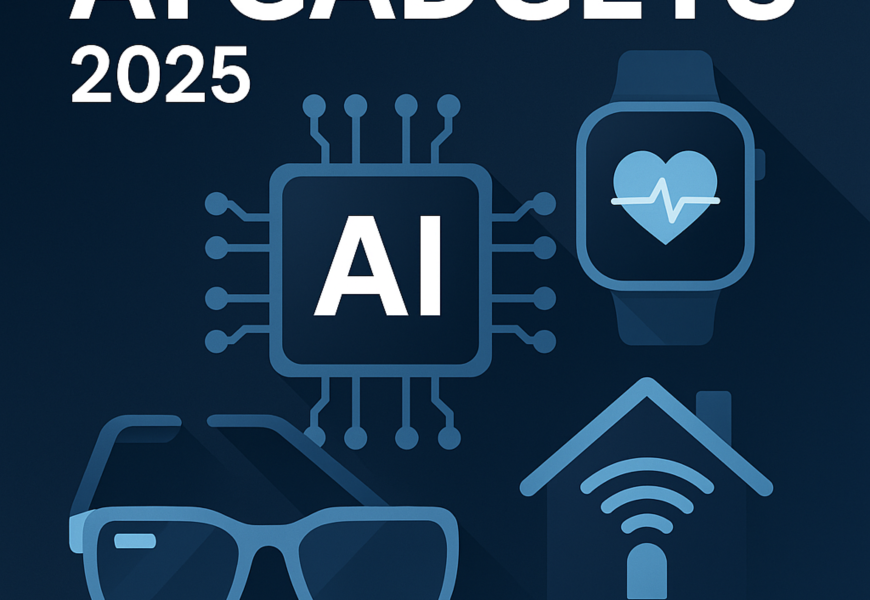
The consumer electronics landscape has fundamentally transformed with artificial intelligence entering everyday devices. From smart glasses that translate languages in real-time to AI-powered home hubs that anticipate your needs, the gadgets of 2025 represent a leap forward in how technology integrates with daily life.
Leading tech companies have shifted from simply adding AI features to designing products where machine learning is the core functionality. This change marks a departure from incremental hardware improvements toward genuinely new categories of devices that redefine what consumers expect from their daily tech.
Smart glasses have emerged as the most exciting category in this new wave of artificial intelligence consumer electronics. These devices can translate conversations in real-time, identify objects and provide contextual information, and record first-person video for memory capture.
Early adopters praise how naturally the technology integrates into daily activities, whether navigating a foreign city or troubleshooting equipment on a job site.
Battery life and aesthetic design have improved dramatically from earlier attempts at wearable AI hardware. Modern smart glasses look similar to standard eyewear, removing a major barrier to adoption that plagued first-generation models.
Enterprise users in fields like logistics and healthcare have quickly adopted the technology, while consumer versions are gaining momentum as prices drop below the $400 threshold for the first time.
The smart home hub has undergone its own revolution, replacing traditional smart speakers in many households worldwide. AI display hubs combine voice control with visual feedback, showing recipes, video calls, and security camera feeds on integrated screens.
This evolution means users no longer need to pull out a phone to interact with their home ecosystem, reducing screen time by an estimated 23 minutes per day according to a 2025 Consumer Technology Association report.
One of the most significant shifts in artificial intelligence consumer electronics is the move toward edge computing, where data processing happens directly on the device rather than in the cloud. This approach dramatically reduces latency, improves privacy, and allows gadgets to function even without an internet connection.
For digital nomads and remote workers who frequently operate in areas with unreliable connectivity, this capability is a game-changing advantage.
Wearable health monitors have also reached new levels of sophistication, now capable of detecting early warning signs of conditions like atrial fibrillation and sleep apnea. These devices sync seamlessly with telehealth platforms, enabling users to share real-time biometric data with healthcare providers across borders.
The global wearable health tech market is projected to reach $195 billion by 2027, driven largely by AI-powered diagnostic features.
Actionable advice for anyone shopping for artificial intelligence consumer electronics this year: prioritize devices with on-device processing, strong privacy policies, and cross-platform compatibility. Avoid products that lock you into a single ecosystem, as flexibility matters when your lifestyle involves hopping between countries and networks.
Reading independent reviews from sources like Wirecutter and Tom’s Hardware before purchasing can save you from expensive disappointments.
The accessories market has kept pace, with AI-enhanced wireless earbuds now offering real-time translation for over 40 languages and adaptive noise cancellation that learns your environment. These earbuds are becoming essential tools for remote professionals who participate in international meetings and collaborative projects.
Pairing them with smart glasses creates a remarkably powerful communication toolkit that fits in a jacket pocket.
Looking ahead, the convergence of artificial intelligence consumer electronics with augmented reality and spatial computing will likely produce the next wave of transformative devices. Industry analysts predict that by 2027, over 60% of new consumer electronics will ship with embedded AI as a standard feature rather than a premium add-on.
For those of us who live and work untethered from traditional offices, staying informed about these developments is not just interesting, it is essential to maintaining a competitive and efficient lifestyle.
The bottom line is that artificial intelligence has moved from a buzzword to a practical foundation for everyday gadgets. Whether you are a freelancer working from a beach in Bali or a consultant splitting time between London and Lisbon, the right AI-powered devices can streamline your workflow and enhance your experience.
The key is choosing products that align with your specific needs rather than chasing every shiny new release on the market.