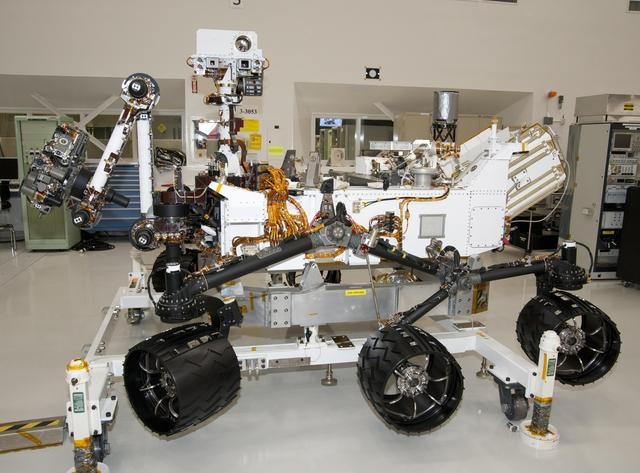
NASA’s Curiosity rover has made what scientists are calling one of the most significant discoveries in the search for extraterrestrial life: a suite of organic molecules on Mars unlike anything previously detected on the Red Planet. The findings, released alongside new analysis of clay-rich rock samples from the Glen Torridon region within Gale Crater, suggest a more complex chemical environment than previous missions documented.
The organic compounds, detected in quantities described as the largest ever found on Mars, include molecular structures that on Earth most commonly originate from biological processes. Scientists caution against definitive conclusions, emphasizing that abiotic chemical reactions can sometimes produce similar compounds.
However, the diversity and complexity of the molecules elevate this discovery above previous organic detections that showed simpler compounds. Curiosity’s success stems from improved analytical techniques that allow the rover’s instruments to examine larger molecules that would previously have been difficult to identify.
The chemistry lab instruments can now break down complex molecular structures and analyze their components with unprecedented precision. Researchers specifically targeted clay-rich sedimentary formations, which on Earth demonstrate exceptional preservation properties for organic materials.
The discovery adds momentum to NASA’s broader Mars exploration strategy and reinforces the scientific rationale behind the agency’s upcoming sample-return missions. For digital nomads and remote workers who follow space science, this breakthrough underscores how cutting-edge technology continues to reshape our understanding of the universe from millions of miles away.
Among the newly identified compounds are thiophenic and aromatic molecules, classes of organics that on Earth are frequently associated with the decay of once-living organisms. While these same molecules can form through purely geological processes, their presence in clay-rich layers that were once the floor of an ancient lakebed makes the biological hypothesis harder to dismiss outright.
The Glen Torridon region, where Curiosity has been drilling since 2019, was chosen because orbital data indicated high concentrations of phyllosilicate clays. On our planet, such clays act as natural vaults, trapping and shielding organic matter from oxidation for billions of years.
Curiosity’s Sample Analysis at Mars (SAM) instrument suite heated powdered rock samples to temperatures exceeding 900 degrees Celsius, releasing trapped gases that were then separated and identified by an onboard mass spectrometer. This thermal-desorption method allowed scientists to detect molecular fragments weighing up to 200 atomic mass units, far heavier than the simple methane and chlorobenzene molecules found in earlier campaigns.
The rover’s CheMin X-ray diffraction instrument complemented these results by confirming the mineralogy of the host rocks, providing context for how the organics were preserved. Together, the two instruments paint a picture of a Martian environment that, roughly 3.5 billion years ago, featured liquid water, essential chemical building blocks, and energy sources capable of sustaining microbial metabolism.
NASA’s Perseverance rover, which landed in Jezero Crater in February 2021, is now collecting sealed rock cores that a future mission will ferry back to Earth. Once in terrestrial laboratories, those samples will undergo analyses orders of magnitude more detailed than anything possible on a rover, potentially delivering a definitive answer about whether life ever existed on Mars.
For those of us working remotely from coffee shops in Lisbon or co-working spaces in Bali, the Curiosity rover discovery on Mars is a powerful reminder that exploration and curiosity are not limited to physical travel. The same spirit of pushing boundaries that drives digital nomads to new countries also propels robotic explorers across alien landscapes.
As NASA continues to refine its search for organic molecules on Mars, each new finding narrows the gap between “possible” and “probable” when it comes to ancient Martian life. Whether the final answer arrives via sample return or a next-generation rover, the journey itself is already rewriting textbooks and inspiring a generation of scientists, engineers, and wanderers alike.