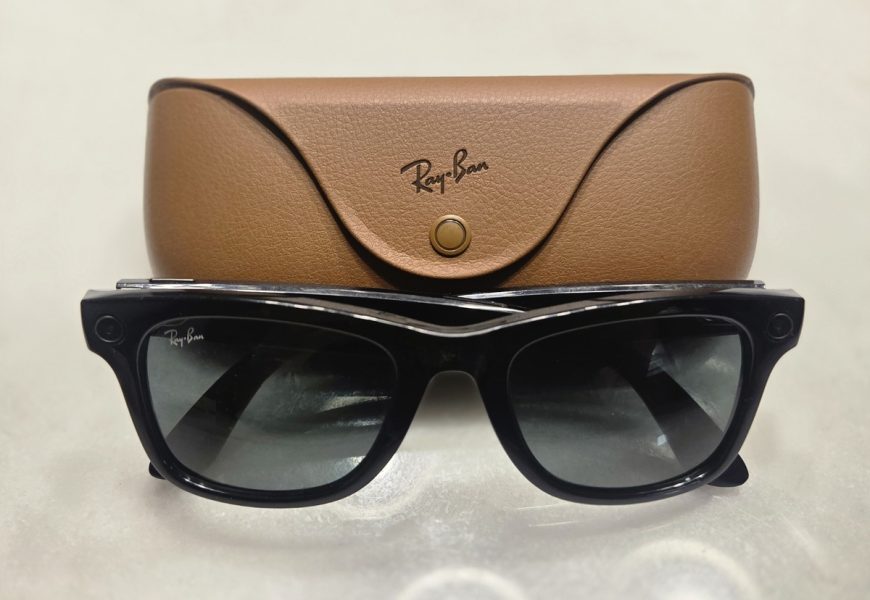
Meta has officially launched its prescription-ready Ray-Ban smart glasses, with the April 14, 2026 ship date bringing AI-powered wearable technology to the mainstream eyewear market for the first time. The glasses, priced starting at $499 for prescription models, represent a significant step forward in making AI assistance a hands-free, always-available experience integrated into daily life.
The launch addresses one of the biggest barriers preventing mainstream adoption of smart glasses: the assumption that users who require vision correction cannot use the technology without dealing with cumbersome workarounds or sacrificing their prescription eyewear entirely. For millions of people worldwide who depend on corrective lenses, this barrier has kept AI wearables firmly in the realm of early adopters and tech enthusiasts.
What Makes These Glasses Different
The prescription models feature lens inserts compatible with individual corrective prescriptions, meaning wearers no longer need to choose between seeing clearly and accessing AI assistance. The glasses retain all features from the standard Gen 2 models—including built-in cameras, open-ear audio, and Meta AI integration—while accommodating prescription lenses from partnered optical providers.
Meta has also introduced new colour options across the Ray-Ban Meta lineup, including updated styles in the Oakley Meta HSTN and Vanguard collections, signalling the company’s intent to position smart glasses as a fashion-forward technology product rather than a niche gadget. The design philosophy clearly prioritises style and accessibility, making prescription-ready Ray-Ban smart glasses appealing to a much broader demographic than previous generations of wearable tech.
Why This Matters for Remote Workers and Digital Nomads
The timing aligns with broader AI trends. As large language models become increasingly integrated into daily workflows, professionals who work remotely or travel frequently stand to benefit enormously from hands-free AI assistance built directly into their eyewear.
Imagine sitting in a café in Lisbon, wearing your prescription-ready Ray-Ban smart glasses, and asking Meta AI to summarise your morning emails, translate a menu in real time, or capture a photo of a whiteboard during a video call—all without reaching for a laptop. For digital nomads juggling multiple time zones, client calls, and creative projects, this kind of seamless multitasking could be transformative.
According to a 2025 McKinsey report, 58% of Americans now work remotely at least part-time, and the global digital nomad population has surpassed 35 million. These professionals increasingly demand tools that are portable, lightweight, and unobtrusive—criteria that prescription-ready Ray-Ban smart glasses meet far more effectively than smartphones or laptops.
Practical Features Worth Knowing
The Meta AI assistant embedded in the glasses can answer questions, identify objects, read text aloud, and even provide navigation directions through the open-ear speakers. The built-in camera allows for hands-free photo and video capture, which is particularly useful for content creators documenting their travels or remote workers who need to quickly share visual updates with their teams.
Battery life remains a consideration: the glasses offer approximately four hours of continuous AI use, with the case providing an additional 36 hours of charging. For long travel days, carrying the charging case is essential—but that is a small trade-off for the convenience of having a full AI assistant built into your everyday eyewear.
The prescription-ready models are available through Meta’s website and select optical partners, with lens fitting typically requiring five to seven business days. Pricing for prescription lenses varies based on the complexity of the correction needed, with single-vision lenses starting around $150 on top of the base $499 frame cost.
For anyone who has been curious about smart glasses but felt excluded because of a prescription, this launch genuinely changes the equation. The prescription-ready Ray-Ban smart glasses from Meta are not just a tech upgrade—they are a signal that AI wearables are finally designed for everyone, not just the tech-obsessed minority.