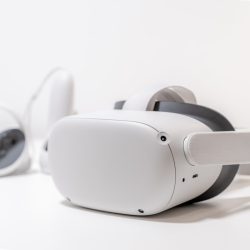
Remember when “smart glasses” meant looking like a cyborg from a 90s movie or wearing a bulky computer on your face? Those days are officially behind us. As we move through 2026, augmented reality has quietly slipped into the mainstream, not as a gimmick, but as a practical tool for everyday life.
The difference this time around is that the technology has finally disappeared into the design.
We are no longer talking about headsets that require a backpack computer or a tether to a heavy gaming console to function properly. The latest generation of frames from major tech players looks almost indistinguishable from premium eyewear you would buy at a high-end optician, with weight distribution that feels natural on the bridge of the nose. Advances in micro-LED projection and sophisticated waveguide optics have shrunk the necessary components down to the size of a thick frame, eliminating the bulky battery packs of the past.
This subtlety is the key to widespread adoption.
Users want utility without looking like they are wearing a piece of lab equipment. The industry has learned that for AR to survive in the wild, it has to be socially acceptable.
One of the most impactful changes for the average user is the deep integration of AI with visual overlays. Imagine walking down a busy street in Tokyo and seeing turn-by-directions floating subtly in front of you, or looking at a menu in a restaurant and seeing instant translation overlaid on the text. You never need to look down at your phone or struggle with a paper map again.
This hands-free navigation extends beyond travel to daily tasks like cooking or complex home repairs. Your glasses can recognize a part you are holding and project the instruction manual or a YouTube tutorial right next to your hands, leaving your actual hands free to work.
The workplace is also undergoing a subtle but significant transformation thanks to these devices.
Remote collaboration has evolved from staring at a grainy grid of faces on a screen to sharing a high-fidelity visual workspace. An engineer in New York can see exactly what a technician is looking at in Berlin and draw precise red circles on specific pipes or wires in the technician’s field of view. This capability drastically reduces industrial downtime and eliminates the frustration that often plagues audio-only support calls.
Even in corporate office settings, meetings are becoming more fluid and efficient. Participants can see floating name tags and relevant documents hovering in their peripheral vision without needing to shuffle papers or switch tabs on a laptop.
For consumers looking to buy their first pair in 2026, the market offers a few distinct categories to consider.
First, you must decide if you need a fully standalone device, which has its own cellular connection and GPS, or a companion pair that relies on your smartphone for heavy processing. Standalone models offer true freedom from your phone but often suffer from shorter battery life due to the power demands of constant connectivity, whereas companion models are lighter and typically last all day. You need to balance your desire for independence with the practical need for a device that does not die by lunchtime.
You should also pay close attention to the field of view, or FOV, which determines how large the virtual image appears in your real world. A narrow FOV can make text hard to read or cause notifications to feel cramped, while a wider FOV provides a much more immersive experience. It is worth visiting a physical retailer