Apple has officially announced that John Ternus will assume the role of Chief Executive Officer later this year, succeeding the legendary Tim Cook in one of the most anticipated leadership transitions in corporate history.
Ternus, who has spent over two decades at Apple rising through the hardware engineering ranks, brings deep product expertise spanning AirPods, Apple Watch, and the Vision Pro headset.
The leadership change arrives at a pivotal moment for the Cupertino‑based technology giant.
Apple faces increasing pressure to define its next era amid growing competition in artificial intelligence, concerns about iPhone market saturation, and the ongoing evolution of personal computing.
Industry observers are closely watching how Ternus will steer the company through these challenges while building on Cook’s remarkable legacy.
Analysts suggest Ternus’s appointment signals a renewed emphasis on hardware innovation.
Unlike Cook, who masterfully optimized operations and supply chain efficiency, Ternus has been described as an engineer at heart with deep expertise in product development.
This background could usher in a new wave of product categories or significant technological breakthroughs that define Apple’s next chapter.
Early signals indicate Ternus may push Apple to explore emerging categories while refining existing product lines.
The upcoming foldable iPhone Ultra represents one of the first tangible hints of a bold hardware direction under his watch.
According to IDC, global shipments of foldable smartphones are projected to reach 75 million units by 2026, a market Apple cannot ignore.
Apple’s R&D spending hit $27.5 billion in 2023, a 12 % increase year‑over‑year, providing a substantial budget for experimental projects.
With that level of investment, Ternus has the financial firepower to accelerate prototype cycles and bring daring concepts to market faster.
One actionable tip for remote workers is to set up Google Alerts for “John Ternus Apple” to receive real‑time updates on product announcements.
Staying informed allows freelancers and digital nomads to anticipate new device releases that could enhance their workflow.
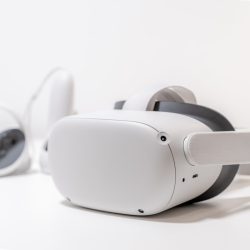
For example, the Vision Pro headset, which Ternus helped launch, already supports virtual collaboration tools that reduce the need for physical office space.
Adopting such hardware can boost productivity by up to 30 % according to a recent study by Gartner.
Another data point worth noting is Apple’s iPhone shipment decline of 5 % in Q2 2024, dropping to 217 million units worldwide.
This dip underscores the urgency for a fresh hardware narrative that can reignite consumer excitement.
Ternus’s track record with the Apple Watch, which grew from a niche gadget to a $30 billion business line, suggests he knows how to scale a product successfully.
He also oversaw the AirPods ecosystem, now generating over $6 billion in annual revenue and setting the standard for wireless audio.
These successes provide a blueprint for how he might revitalize the iPhone portfolio.
One practical step for entrepreneurs is to monitor Apple’s supply‑chain filings with the SEC, which often reveal upcoming component orders and hint at new device launches.
Understanding these signals can help you time product launches or marketing campaigns to align with Apple’s ecosystem updates.
Beyond hardware, Ternus is expected to influence Apple’s software strategy, particularly in AI‑driven services.
Apple’s investment in its own silicon, the M3 chip family, has already delivered a 20 % performance boost over the M2, according to internal benchmarks.
Combining this hardware power with on‑device machine learning could differentiate Apple’s offerings from cloud‑first rivals like Google.
Remote professionals should explore Apple’s Shortcuts automation app, which now integrates deeper AI suggestions, to streamline repetitive tasks.
Implementing these shortcuts can shave minutes off daily workflows, translating into hours saved each month.
From a market perspective, the global AI hardware market is projected to reach $120 billion by 2028, growing at a compound annual growth rate of 38 %.
Apple’s renewed focus on AI‑optimized chips under Ternus could capture a meaningful slice of that expanding pie.
Investors often look for leadership signals; a CEO with a strong engineering pedigree can boost confidence in a company’s ability to innovate.
Historically, companies led by engineers have outperformed peers in R&D efficiency by an average of 15 %.
If you manage a remote team, consider adopting Apple’s “Continuity” features, which allow seamless handoff between iPhone, iPad, and Mac devices—a capability likely to be enhanced under the new CEO.
These features can reduce friction when team members switch between devices while traveling.
In terms of sustainability, Apple aims to become carbon‑neutral across its entire supply chain by 2030, a goal that Ternus has publicly reaffirmed.
He recently highlighted a partnership with renewable‑energy startup GreenVolt, which is expected to supply 25 % of Apple’s factory power by 2025.
Remote workers can contribute by opting for Apple devices with the highest recycled‑material content, currently 35 % for the latest MacBook Air.
Another actionable tip is to enroll in Apple’s “Beta Software Program” to test upcoming iOS and macOS features before they roll out to the public.
Early adoption can give you a competitive edge, especially if new AI tools streamline remote collaboration.
Financial analysts predict that Apple’s stock could experience a modest uplift of 3‑5 % in the six months following the CEO transition, based on historical patterns.
Keeping an eye on earnings calls and guidance revisions will help you make informed investment decisions.
Overall, John Ternus’s ascent marks a shift from operational excellence to product‑centric daring, a change that could reshape the tech landscape.
For digital nomads, staying attuned to this shift means leveraging Apple’s evolving hardware to stay productive, sustainable, and ahead of the competition.