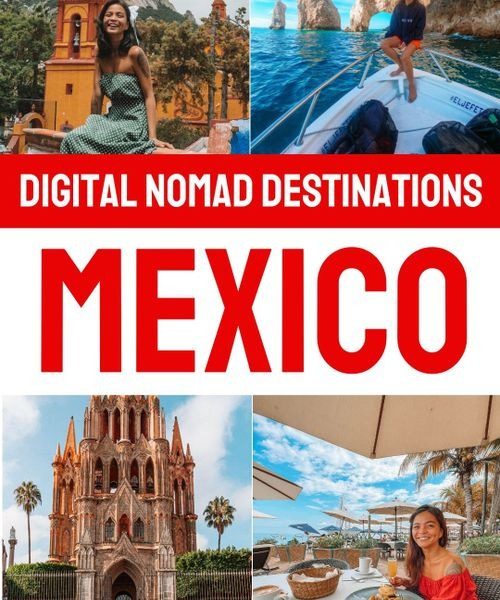
Mexico has quietly become one of the most popular destinations for remote workers, and for good reason. The time zones align with U.S. business hours, the food is extraordinary, and the cost of living can be remarkably low compared to major American cities. But living in Mexico as a digital nomad is a different experience than vacationing there for two weeks, and there are some realities that travel blogs tend to gloss over.
Let’s start with cost, since that’s usually the first thing people ask about. In Mexico City, a comfortable one-bedroom apartment in a neighborhood like Roma Norte or Condesa runs between $600 and $1,200 per month, depending on whether you want a modern building with a gym or a charming older walk-up with no elevator. Oaxaca is noticeably cheaper, with decent one-bedrooms starting around $400, while Playa del Carmen sits somewhere in between, though beachfront options inflate quickly. Groceries are genuinely affordable — a week of fresh produce, tortillas, and local cheese from a mercado might cost you $25 to $30. Eating out ranges from $3 street tacos to $15 sit-down meals at a proper restaurant, so your monthly food budget can stay under $300 without much effort.
Internet reliability is the topic that surprises most newcomers. Mexico City generally delivers fiber-optic speeds of 50 to 200 Mbps in well-connected neighborhoods, and many Airbnbs advertise dedicated fiber connections. The problem is consistency. Power outages happen, especially during rainy season from June through October, and some buildings in older neighborhoods still rely on aging infrastructure. The practical fix is to always have a backup: buy a Telcel SIM card with a data plan — about $15 for 30 GB — and keep it loaded so you can tether when your Wi-Fi drops. In Oaxaca and Playa del Carmen, internet quality is more variable. Coworking spaces tend to have the most reliable connections, but residential internet in smaller towns can be frustratingly slow during peak hours.
Speaking of coworking, the scene has exploded in recent years. Mexico City leads the pack with spaces like WeWork, Selina, and independent spots like Dayzio in Roma Norte, where a dedicated desk runs $150 to $250 per month. Oaxaca has a smaller but growing number of options, including Spaces and a handful of local cafés that genuinely welcome laptop workers. Playa del Carmen has carved out a niche as a digital nomad hotspot, with coworking spaces like Nest and Bessel clustering in the town center. A monthly coworking membership across these cities typically costs between $100 and $300, which is still a fraction of what you’d pay in Austin or Miami.
Safety is the concern that dominates every conversation about living in Mexico as a digital nomad, and it deserves a nuanced answer. Mexico City’s Roma and Condesa neighborhoods are generally very safe during the day and reasonably safe at night, with a visible police presence and well-lit streets. Petty theft — phone snatching, bag slashing — is the most common crime you’ll encounter, not violent crime. Oaxaca feels safer overall, with a slower pace and tight-knit expat communities, though walking alone late at night in unfamiliar areas is never wise anywhere. Playa del Carmen has seen some cartel-related violence in surrounding areas, but the tourist corridor and expat zones remain heavily patrolled. The honest advice is to use common sense: don’t flash expensive electronics, use Uber instead of hailing street taxis, and learn which neighborhoods to avoid after dark.
Healthcare access is one of Mexico’s underrated advantages for remote workers. Private hospitals in Mexico City, like Hospital Ángeles and Médica Sur, offer world-class care at a fraction of U.S. prices. A general consultation with a private doctor costs $30 to $50, and many physicians speak English. Pharmacies across the country stock medications that require prescriptions in the U.S., often over the counter and at lower prices. For more serious needs, dental work and lab tests are dramatically cheaper — a dental cleaning might cost $25 to $40. The one caveat is that expat-focused health insurance, while affordable at roughly $50 to $150 per month, is worth purchasing early rather than waiting until you need it.
The visa situation is straightforward for most nomads. Americans and Europeans get 180 days on arrival, and while overstaying technically violates immigration law, enforcement against remote workers has been minimal. That said, Mexico tightened its immigration enforcement in 2023 and 2024, so running a quick border run to Belize or Guatemala to reset your stamp is no longer as casual as it once was. If you plan to stay long-term, applying for temporary resident status is the legitimate path, and it requires proof of income — typically around $2,500 per month — which most remote workers can document easily.
Living in Mexico as a digital nomad rewards those who approach it with flexibility and patience. The bureaucracy can be maddening, the altitude in Mexico City takes adjustment, and the cultural rhythm of slower service requires a mental shift. But the trade-offs — affordable living, incredible food, a thriving creative community, and the ability to explore ancient ruins on a random Tuesday — make it one of the most compelling bases for remote work available today. Just bring a good VPN, a backup hotspot, and a willingness to embrace the beautiful chaos.