Apple’s announcement that John Ternus will succeed Tim Cook as chief executive officer marks one of the most significant leadership transitions in the technology sector this decade. Ternus, currently senior vice president of hardware engineering, will assume the role on September 1, 2026, after nearly 15 years of Cook’s stewardship.
The move sends ripples through the entire tech ecosystem, raising questions about product strategy, AI direction, and the future of one of the world’s most valuable companies. For those of us in the digital nomad and remote work community, Apple’s leadership shift could directly shape the tools and devices we rely on every day.
Ternus joined Apple in 2001 as part of the product design team and rose to lead all hardware engineering across the iPhone, iPad, Mac, Apple Watch, AirPods, and Vision Pro. His tenure spans the entire evolution of Apple’s hardware dominance, making him one of the most experienced engineering leaders in consumer electronics.
“Having spent almost my entire career at Apple, I have been lucky to have worked under Steve Jobs and to have had Tim Cook as my mentor,” Ternus said in a statement following the announcement. Cook himself will transition to executive chairman of Apple’s board, ensuring continuity during the handover.
The succession arrives as Apple faces mounting pressure in the artificial intelligence arms race. Rivals including Google, Microsoft, and Amazon have accelerated AI integration across their product lines, while Apple’s own AI efforts, branded as Apple Intelligence, have drawn mixed reviews since their debut at WWDC 2024.
Industry analysts note that Apple’s stock dipped 2.3% in after-hours trading following the announcement, reflecting investor uncertainty about the company’s AI roadmap under new leadership. Ternus will need to address these concerns quickly, especially as competitors like Samsung and Google embed generative AI directly into their flagship devices.
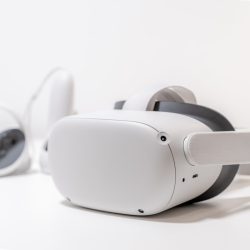
What makes Ternus a compelling choice is his track record of delivering products that define entire categories. Under his hardware leadership, Apple launched the M-series chips that transformed the Mac lineup, the Apple Watch that dominates the wearable market with over 50% global share, and the Vision Pro spatial computing headset that opened an entirely new product frontier.
His deep engineering background suggests Apple may prioritize hardware-software integration even more aggressively, potentially leading to tighter AI capabilities built directly into silicon. This approach could give Apple a meaningful edge, as custom-designed neural engines already power features like Face ID, computational photography, and on-device Siri processing.
For remote workers and digital nomads, the implications are tangible. A hardware-focused CEO could mean faster iteration on MacBook battery life, improved cellular connectivity for iPads, and more powerful on-device AI features that work without an internet connection, a critical advantage when you’re working from a beach in Bali or a café in Lisbon.
Apple’s services division, which generated $85.2 billion in revenue during fiscal year 2024, will also be watching this transition closely. Ternus has historically been a hardware-first leader, and the question of whether he will invest equally in services like iCloud, Apple TV+, and the App Store remains open.
Cook’s legacy as CEO is defined by operational excellence, supply chain mastery, and growing Apple’s market capitalization from roughly $350 billion to over $3.4 trillion. Ternus inherits a company at its most valuable point in history, but also one facing its most competitive environment in years.
The tech industry will be watching Apple’s next product cycle closely, expected to include an AI-enhanced iPhone 17 lineup and potentially a redesigned MacBook Pro with next-generation M5 chips. These launches will serve as the first real test of Ternus’s vision for the company.
One area where Ternus could make an immediate impact is in Apple’s approach to enterprise and productivity tools. Remote work has become a permanent fixture of the global workforce, and Apple has an opportunity to position the Mac and iPad as the definitive platforms for location-independent professionals.
Features like improved Stage Manager multitasking, deeper integration with third-party collaboration tools, and AI-powered workflow automation could transform how digital nomads use Apple devices daily. Ternus’s engineering-first mindset may accelerate exactly these kinds of practical, user-facing improvements.
The leadership transition also signals a broader trend in the tech industry toward promoting from within rather than hiring external CEOs. Google, Microsoft, and Meta have all followed similar patterns, favoring institutional knowledge and cultural continuity during periods of rapid technological change.
As Apple enters this new chapter, the entire tech ecosystem, from app developers to accessory makers to the millions of remote workers who depend on Apple’s ecosystem, will be paying close attention. John Ternus taking the helm at Apple represents not just a change at the top, but a potential pivot point for how the world’s most iconic technology company navigates the AI era.