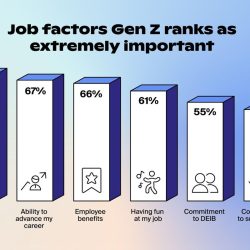
FlexJobs’ State of the Workplace 2026 report reveals a seismic shift in worker priorities, with remote work now ranking as the number one job perk that professionals seek when evaluating employment opportunities, surpassing even salary for the first time. This marks a watershed moment in the evolution of how we think about careers, compensation, and quality of life.
The data shows that 22.7% of workers were teleworking or working from home as of February 2026, with approximately 10.4% working all their hours remotely. More significantly, among those currently working hybrid schedules, the desire is to increase rather than decrease remote days, signaling that partial flexibility is simply a stepping stone toward full location independence for many professionals.
The Flexibility Equation
What drives this fundamental reordering of priorities? Experts point to several factors, and understanding them is essential for anyone considering a remote work lifestyle or building a career that supports global mobility.
First, remote work has enabled millions to reclaim hours previously lost to commuting, with full-time office workers spending up to 45 minutes daily traveling to and from work. Over a year, that adds up to roughly 180 hours, time that remote workers can redirect toward side projects, fitness, family, or simply rest.
Second, geographic flexibility has become paramount for a generation that witnessed the possibilities of global mobility during the pandemic. Workers increasingly view location independence as a form of wealth, enabling lifestyle choices that would be impossible with traditional office-bound careers, from slow travel through Southeast Asia to splitting time between mountain towns and coastal cities.
Third, the mental health benefits of remote work cannot be overstated. A 2025 Buffer survey found that 82% of remote workers reported improved work-life balance, while 78% said they experienced lower stress levels compared to their in-office counterparts.
These numbers resonate deeply with digital nomads who have long championed the connection between freedom of movement and personal well-being.
Employer Response
Forward-thinking companies have responded by developing sophisticated remote work policies that emphasize output over presence. These organizations report higher employee satisfaction, reduced turnover, and increasingly, lower real estate costs as they rightsize their physical footprints.
Companies like GitLab, Zapier, and Automattic have operated as fully remote organizations for years, proving that distributed teams can outperform traditional office setups. GitLab’s publicly available handbook, which spans over 2,000 pages, has become the gold standard for remote-first company culture and asynchronous communication.
However, resistance remains strong in certain sectors, particularly finance, healthcare, and manufacturing, where regulatory requirements and physical presence are harder to circumvent. Even within these industries, though, hybrid models are gaining traction as leaders recognize that rigid in-office mandates are driving top talent toward more flexible competitors.
The Rise of the Digital Nomad Workforce
Perhaps the most exciting development is the explosion of digital nomad-specific infrastructure. Countries like Portugal, Thailand, Mexico, and Estonia now offer dedicated digital nomad visas, making it easier than ever to live and work legally abroad.
These programs have attracted hundreds of thousands of remote workers who contribute to local economies while enjoying a lower cost of living.
Coworking spaces have followed this trend, with brands like Selina, Outsite, and Nomad List creating communities designed specifically for location-independent professionals. These spaces offer more than just Wi-Fi and desks, they provide networking events, skill-sharing workshops, and a sense of belonging that combats the isolation some remote workers experience.
Actionable Tips for Aspiring Remote Workers
If you’re looking to transition into a remote work lifestyle, start by auditing your current skill set against in-demand remote job categories. Software development, digital marketing, UX design, content creation, and customer success consistently top the lists of most accessible remote roles.
Build a portfolio that demonstrates your ability to work independently and communicate asynchronously. Employers hiring for remote positions prioritize self-discipline, written communication skills, and a track record of delivering results without constant supervision.
Finally, test the lifestyle before committing fully. Take a one-month workation to a city like Lisbon, Medellín, or Chiang Mai to see how you handle the practical realities of working across time zones, managing unreliable internet, and maintaining productivity without the structure of an office.
Many aspiring digital nomads discover that the reality is both more challenging and more rewarding than they imagined.
The future of work is not a return to the office, it is a reimagining of what productivity, freedom, and fulfillment can look like when geography is no longer a constraint. Remote work is no longer a perk, it is the foundation upon which an entirely new way of living and earning is being built.