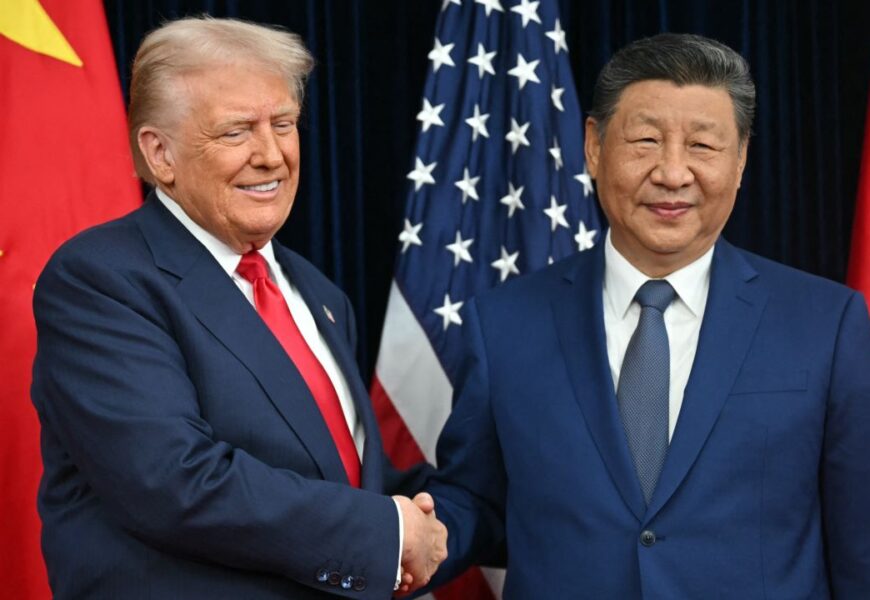
The historic meeting between President Donald Trump and Chinese President Xi Jinping in Beijing on May 14, 2026, delivered a mix of diplomatic milestones and unresolved tensions that will shape global markets for months to come. From Taiwan’s contested status to a disputed Boeing aircraft agreement worth billions, the summit revealed both fragile progress and deep structural divides between the world’s two largest economies.
## A Diplomatic Photo Op with Substantive Disagreements
The two leaders met at the Great Hall of the People for a state banquet that underscored the ceremonial importance both sides placed on the visit. Yet beneath the formal handshakes and public declarations, substantive negotiations proved challenging.
According to reporting from major news outlets, Xi made China’s position on Taiwan unambiguously clear: Beijing considers reunification a core national interest and has not altered its long-term stance despite recent diplomatic outreach.
“The biggest common denominator between China and the US is safeguarding peace and stability across the Taiwan Strait,” Xi was quoted as saying during the summit. Trump responded by noting that US policy on Taiwan “is unchanged as of today,” a statement that offered limited reassurance to markets already sensitive to geopolitical flashpoints.
## The Boeing Dispute: $200 Billion in Question
One of the most contentious aspects of the summit involved aircraft purchases. Prior to the visit, Trump announced that Xi had agreed to purchase 200 Boeing aircraft—a deal that could be valued at more than $200 billion.
However, during the summit, Chinese officials disputed the characterization of the agreement, suggesting that preliminary discussions had been misrepresented as firm commitments.
The discrepancy highlights ongoing challenges in US-China trade relations, where grand announcements frequently collide with the complex realities of Chinese state procurement processes. Aviation analysts note that China’s state airlines have been gradually diversifying their fleet away from Boeing toward European rival Airbus, making any large Boeing order contingent on significant political goodwill from Beijing.
Markets reacted cautiously to the ambiguity. Aviation stocks experienced modest volatility, while the broader indices remained focused on the summit’s broader implications for trade policy and technology restrictions.
## Taiwan: The Central Flashpoint
Taiwan dominated discussions in every bilateral meeting, with US officials characterizing the island’s stability as indispensable to global supply chains and regional security. The Taiwan Strait remains one of the world’s most strategically sensitive waterways, with approximately half of global container shipping passing through nearby routes annually.
China’s increased military activities near Taiwan in recent years have raised alarms in Washington and among regional allies, particularly Japan and South Korea. The summit did not produce any breakthrough on the status of the island, though both sides agreed that maintaining communication channels was essential to avoiding miscalculation.
“The risk of misunderstanding in this region is simply too high,” said one senior administration official familiar with the negotiations. “The summit established最低限度的接触—minimum contact—but genuine resolution remains distant.”
## Tech Restrictions and Market Implications
Beyond diplomatic ceremonial matters, the talks addressed ongoing restrictions on advanced semiconductor technology exports to China. The US has maintained strict controls on Nvidia’s H200 chips and other AI-related hardware, citing national security concerns.
Trump suggested during his departure from Beijing that China was “choosing not to buy” US chips as a protective measure for its domestic industry—a characterization that Beijing disputes.
Technology stocks, particularly chipmakers, showed resilience during the summit week as investors weighed the likelihood of expanded export restrictions against hopes for a broader trade détente. The Philadelphia Semiconductor Index gained modestly on news that negotiations would continue through subordinate channels.
## What Comes Next
Both sides agreed to continue talks through established diplomatic frameworks, with working groups assigned to address trade imbalances, technology policy, and regional security concerns. However, analysts caution that fundamental tensions remain largely unaddressed.
For global markets, the summit delivered a temporary reprieve from escalation but few concrete deliverables. Investors will watch for follow-up negotiations on aviation purchases, technology transfer policies, and the status of tariffs imposed over the past two years.
Until concrete agreements emerge, the US-China relationship will remain a source of uncertainty for multinational corporations and international investors alike.
The coming weeks will test whether the diplomatic warmth of the summit can translate into binding commitments—or whether both sides will retreat to familiar positions as domestic pressures reshape their negotiating priorities.