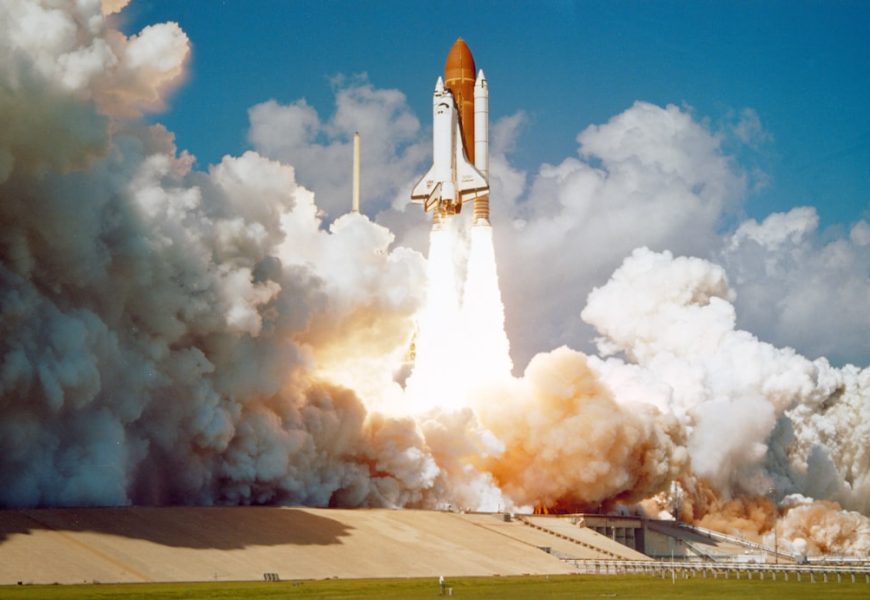
NASA Artemis II Mission Prepares for Historic Crewed Lunar Journey
The NASA Artemis II mission represents humanity’s first return to lunar orbit in over fifty years. Four astronauts are training intensively for this groundbreaking journey that will pave the way for future moon landings.
The mission will send a crewed Orion spacecraft around the moon testing all critical life support and navigation systems. This flight is the essential precursor to Artemis III which aims to land astronauts on the lunar surface for the first time since Apollo 17 in 1972.
Crew Composition and Training
The Artemis II crew includes Commander Reid Wiseman Pilot Victor Glover and Mission Specialists Christina Koch and Jeremy Hansen. This diverse team represents NASA and the Canadian Space Agency demonstrating the international collaboration at the heart of the Artemis program.
Each crew member brings unique expertise to the mission. Wiseman is a veteran naval aviator and astronaut.
Glover was the first African American to serve as a SpaceX Crew Dragon pilot. Koch holds the record for the longest single spaceflight by a woman.
Hansen is a Canadian Space Agency astronaut and fighter pilot.
Spacecraft and Launch Vehicle
The Orion spacecraft has undergone extensive testing and modifications since the uncrewed Artemis I mission. Improvements include upgraded life support systems enhanced radiation protection and refined navigation software for the crewed flight.
The Space Launch System rocket will provide the power needed to send Orion beyond low Earth orbit. This powerful rocket generates more thrust than any other currently operational launch vehicle making it capable of sending humans to deep space destinations.
Mission Timeline and Objectives
The Artemis II mission will last approximately ten days. The crew will travel to the moon perform a lunar flyby and return to Earth splashing down in the Pacific Ocean where recovery teams will be standing by.
Key objectives include testing Orion’s life support systems in deep space evaluating the crew interfaces and conducting critical navigation maneuvers. Every system must perform flawlessly before NASA can commit to the Artemis III landing mission.
Scientific Research During the Mission
The crew will conduct important scientific experiments during their lunar journey. These studies will gather data on radiation exposure in deep space the effects of long-duration spaceflight on the human body and communications performance at lunar distances.
This research is vital for planning future missions to Mars. Understanding how spacecraft systems and human physiology respond to the deep space environment is essential for designing longer-duration missions beyond the Earth-moon system.
Public Engagement and Inspiration
NASA plans extensive public outreach during the Artemis II mission. Live video feeds from the spacecraft educational programming and social media updates will bring the journey to people around the world generating excitement for space exploration.
The Artemis program aims to inspire the next generation of scientists engineers and explorers. Seeing astronauts from diverse backgrounds traveling to the moon demonstrates that space is accessible to all of humanity regardless of background or nationality.
What This Means for Future Space Exploration
Artemis II is more than a single mission it is a stepping stone to humanity’s future in space. Success will enable NASA to proceed with Artemis III the actual moon landing and eventually establish a permanent human presence on the lunar surface through the Gateway space station.
The technologies and techniques developed for Artemis will ultimately support human missions to Mars. Each successful mission builds confidence and capability bringing the dream of interplanetary travel closer to reality with every successful launch and safe return.
The Artemis II crew has been training together for months building the team cohesion essential for mission success. They have practiced emergency scenarios spacecraft systems operations and communication protocols to prepare for every possible situation that might arise during their historic journey around the moon and back to Earth.
International collaboration is a hallmark of the Artemis program. The partnership between NASA and the Canadian Space Agency demonstrates how nations can work together to achieve ambitious space exploration goals at a fraction of the cost any single country would bear alone.