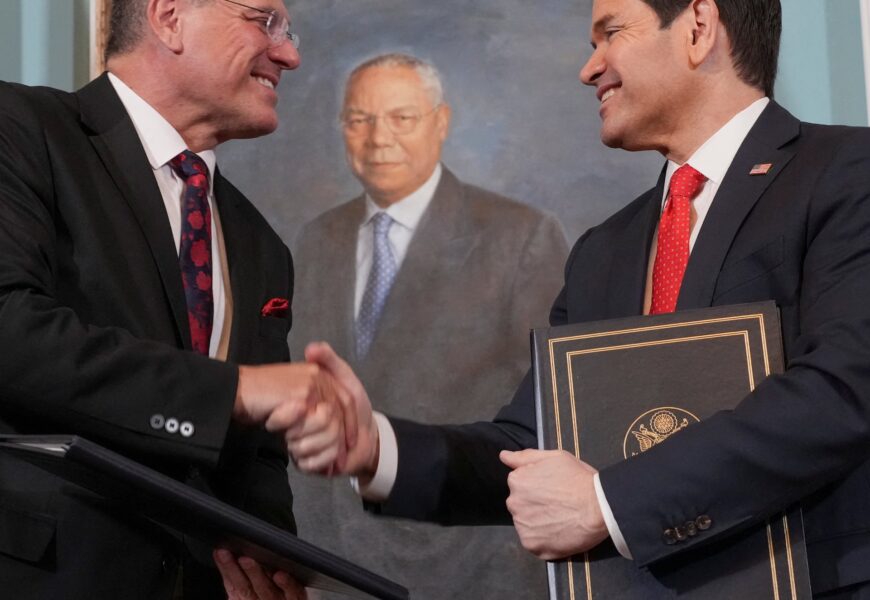
# EU and US Sign Historic Critical Minerals Deal: Why It Matters for Global Trade
In a move that could reshape transatlantic supply chains and reduce Western dependence on Chinese-controlled minerals, the European Union and the United States signed a landmark critical minerals partnership in April 2026. The agreement, accompanied by a joint Action Plan, aims to coordinate trade policies across the full minerals value chain—from extraction to processing to manufacturing.
The deal targets a range of minerals deemed essential for modern industries, including lithium, cobalt, nickel, and rare earth elements used in everything from electric vehicles to military hardware. The announcement came on April 24, 2026, and immediately drew attention from markets, governments, and energy analysts worldwide.
## Why This Deal Was Inevitable
The partnership responds to years of growing concern in both Brussels and Washington about the concentration of critical mineral supply chains in China. For the EU in particular, the transition to electric vehicles and renewable energy has exposed how dependent the bloc has become on imported rare earths—most of which pass through Chinese processing facilities at some stage.
The Russia-Ukraine conflict accelerated this thinking. Energy supply disruptions showed European policymakers just how vulnerable global supply chains can be when they rely too heavily on a single source.
Critical minerals, used in everything from defence systems to semiconductor manufacturing, followed the same pattern. The new partnership is an attempt to fix that.
## What the Action Plan Actually Does
The EU-US Action Plan goes beyond a simple trade agreement. It establishes shared standards for mineral sourcing, joint investment mechanisms for new mining projects outside China, and coordinated research into recycling and alternative materials.
Both sides have also agreed to share data on supply chain risks and to coordinate responses to market disruptions.
A key element is the emphasis on building what officials call a “wider transatlantic minerals bloc.” That means encouraging countries like Canada, Australia, and partner nations in Latin America and Africa to participate in a more diversified supply network. The goal is to ensure that neither the EU nor the US has to depend on Chinese-controlled infrastructure for materials that are central to national security and economic competitiveness.
## Defence and EV Supply Chains at the Core
For the defence sector, the deal has immediate implications. Modern military equipment—from advanced radar systems to electric-powered naval vessels—requires specific minerals that have limited global suppliers.
By securing alternative sources, both the EU and the US reduce a strategic vulnerability that has been on intelligence and procurement agendas for years.
The electric vehicle sector stands to benefit equally. Automakers on both sides of the Atlantic have been vocal about the risk of mineral shortages slowing the EV transition.
A transatlantic supply chain for battery-grade materials could ease those constraints and potentially lower costs through scale and competition.
## Market Reaction and What Comes Next
Mining and battery stocks rallied following the announcement, with investors betting on increased demand for non-Chinese mineral sources. Analysts noted that the deal’s real impact will depend on how quickly new projects can be developed—the minerals in question take years to bring into production.
The longer-term question is whether the partnership can deliver on its ambition without triggering a trade response from China, which remains the dominant processor of many critical minerals. Whether this deal marks the beginning of a broader decoupling or simply a hedge against disruption will become clearer as the Action Plan’s specific measures take shape over the coming months.
This is one of the most significant EU-US economic agreements in years, and its effects will likely unfold across industries far beyond mining and defence.