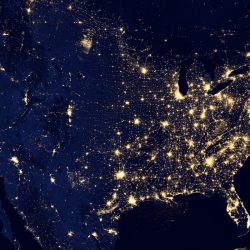
Artificial light has slowly stolen the night from most of us living in modern cities. We often forget that the sky isn’t actually a hazy orange glow. But a quiet revolution is currently taking place among travelers who are seeking out the darkest corners of the globe.
Welcome to the world of dark sky tourism. It is rapidly becoming one of the hottest trends for digital nomads and adventurers alike. People are actively trading bright city lights for celestial ones.
For remote workers, the allure of escaping the glow of screens is obvious. After a long day of coding or writing, there is something profoundly restorative about looking up at a canvas of infinite stars. It offers a perspective shift that no meditation app can replicate.
This travel niche provides a necessary antidote to digital burnout. It forces us to slow down and disconnect from the constant demands of the online world. The experience is both humbling and inspiring.
The International Dark-Sky Association (IDA) certifies specific places around the world that meet strict darkness standards. These “Dark Sky Reserves” and “Sanctuaries” actively protect the night environment from light pollution. Visiting one of these certified sites guarantees a view that is truly out of this world.
If you are ready to pack your bags, Namibia should be at the very top of your list. The NamibRand Nature Reserve is one of the darkest places on Earth, offering a silence that is as heavy as the darkness. You can camp under the stars with absolutely zero light pollution for miles.
For those staying in the Southern Hemisphere, the Aoraki Mackenzie International Dark Sky Reserve in New Zealand is a must-visit. The clarity of the sky there is legendary, largely due to the high altitude and low humidity. You can even take a stargazing tour from the comfort of a hot air balloon.
Closer to the equator, Chile’s Atacama Desert offers high-altitude views that are simply unmatched. It is the driest desert in the world, creating a crystal-clear window to the cosmos that attracts scientists and tourists alike. Astrophotographers flock here to capture the galactic center rising over dramatic salt flats.
Don’t worry if you are based in the Northern Hemisphere. The Pic du Midi in the French Pyrenees offers a stunning observatory experience where you can sleep among the stars. Alternatively, the Great Basin National Park in Nevada is a designated International Dark Sky Park that remains largely crowd-free.
Planning a trip around the lunar cycle is crucial for the best experience. You want to schedule your visit during the new moon phase to ensure the sky is as black as velvet. A full moon acts like a giant floodlight, washing out the fainter stars and nebulae you want to see.
You don’t need to spend a fortune on heavy telescopes, but a good pair of binoculars can enhance the experience significantly. However, the naked eye is often enough to be awestruck in these certified reserves. Just remember to let your eyes adjust to the dark for at least twenty minutes.
Dress warmly, no matter where you go. Stargazing requires standing still for long periods, and the desert or mountain air gets cold quickly at night. Layers are your best friend.
Being a digital nomad allows you to visit these places during off-peak times when the weather is still good. You can work during the day and explore the universe at night without fighting weekend crowds. This flexibility is a specific superpower for dark sky travelers.
Just remember that internet access can be spotty in these remote sanctuaries. Download your work ahead of time or embrace the opportunity for a temporary digital detox. The lack of Wi-Fi is actually part of the charm.
Dark sky tourism reminds us of our small place in the universe. It is a humbling experience that inspires creativity and wonder in equal measure. So, turn off your laptop, step away from the city lights, and look up. The stars are waiting for you.