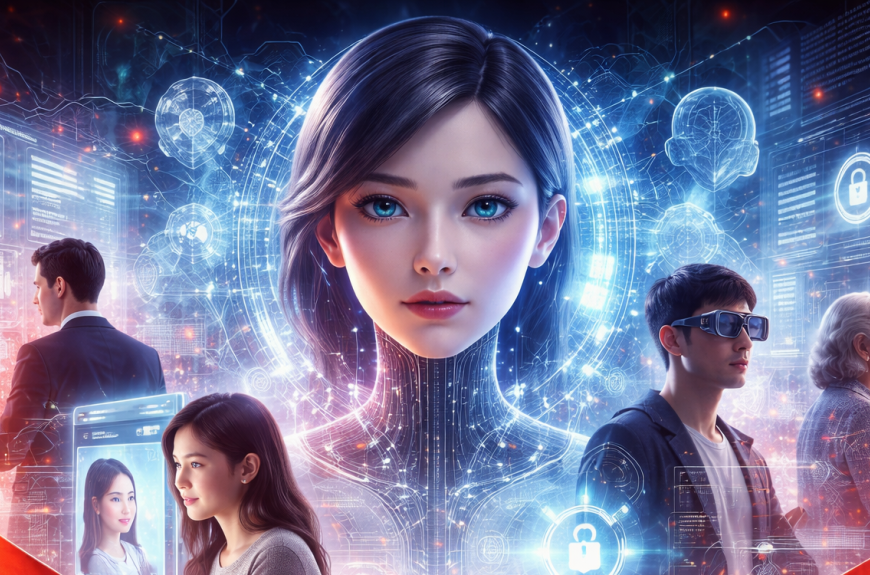
China has launched sweeping new regulations targeting “digital humans” and virtual entities, marking one of the world’s most comprehensive attempts to govern AI-generated avatars and virtual influencers. The Cyberspace Administration of China published draft rules on April 3, 2026, requiring clear labelling of AI-generated virtual characters and prohibiting “virtual intimate relationships” with users under 18.
The proposed regulations come as digital humans—AI-powered virtual avatars used for entertainment, marketing, education, and customer service—proliferate across Chinese platforms. Industry estimates suggest more than 100 million registered digital humans operate in China today, generating billions in revenue annually through live streaming, virtual influencers, and AI companions.
**Why Beijing Is Acting Now**
“The governance of digital virtual humans is no longer merely an issue of industry norms—it has become a strategic scientific problem that concerns the security of the cyberspace, public interests, and the high-quality development of the digital economy,” the Cyberspace Administration stated in its public consultation document.
The rules target several concerns. First, transparency: platforms must label all AI-generated content prominently so users know they are interacting with a virtual entity rather than a real person. Second, child safety: the regulations explicitly ban digital humans from offering “virtual intimate relationships” to minors, responding to parental concerns about AI companions forming inappropriate emotional bonds with young users.
A third focus involves data security. Digital humans collect significant personal data during interactions—voice patterns, facial expressions, conversation history, and behavioural insights. The proposed rules require strict data minimisation protocols and limit how long such information can be retained.
**Global Implications**
China’s regulatory approach is drawing attention from lawmakers in Europe, North America, and Southeast Asia who are grappling with similar questions about AI governance. The European Union’s AI Act includes provisions for deepfake labelling, but China’s rules go further by restricting specific use cases for younger users.
Tech companies operating in China—including ByteDance, Tencent, Baidu, and Alibaba—are closely analysing the rules, as non-compliance could result in fines exceeding 10 million yuan (approximately $1.4 million) or operational suspension. Public comment on the draft regulations remains open until May 6, 2026.
For international businesses using AI avatars or virtual influencers in Chinese markets, the timeline creates pressure to audit existing digital human deployments and ensure compliance before the rules take effect.
**What Digital Humans Mean for Everyday Users**
Beyond the regulatory technicalities, these new rules highlight a broader shift: digital humans are becoming mainstream. From virtual customer service agents to AI-powered influencers with millions of followers, virtual entities now play significant roles in how people discover products, learn new skills, and seek companionship online.
The new rules aim to ensure that this virtual world operates with clear boundaries—especially when children and teenagers are involved. Whether the regulations succeed in balancing innovation with protection will be watched closely by regulators worldwide.