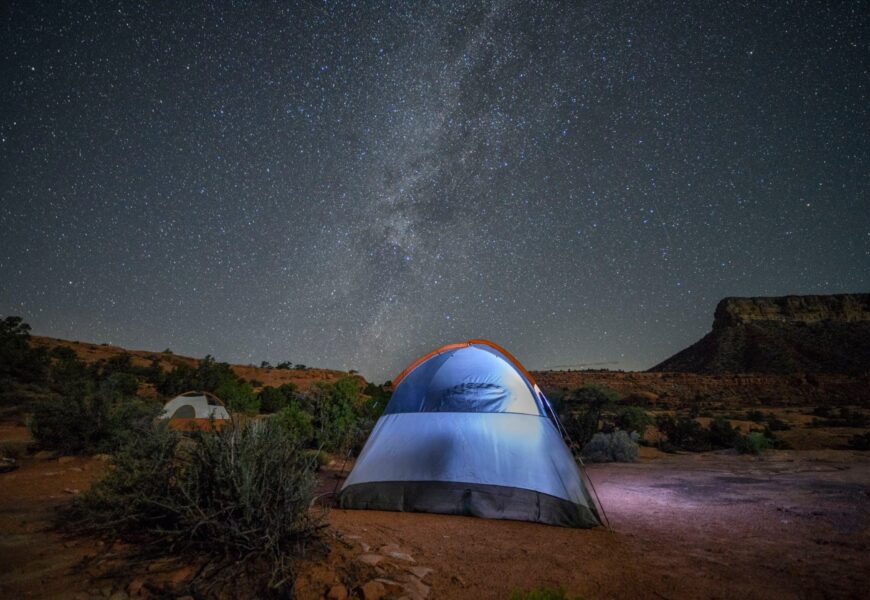
Light pollution has erased the night sky for most of the world’s population. Walk outside in any major city and you’ll see a pale orange glow — a byproduct of urban development that has robbed billions of people of one of nature’s most awe-inspiring sights. Now, a growing tribe of travelers is willing to travel to the ends of the Earth just to get it back.
Dark sky tourism — travel built around visiting destinations with minimal light pollution for optimal stargazing and celestial observation — is projected to grow at nearly 10% annually and reach $400 million globally by 2030. What was once a niche pursuit for astronomers and astrophotographers has gone mainstream, attracting everyone from honeymooners to corporate retreat groups seeking a digital detox wrapped in wonder.
## Where the Stars Come Out to Play
The surge in dark sky travel has spawned a global network of certified Dark Sky Places. Dark Sky International, the organization behind the certification movement, now recognizes more than 200 locations across 22 countries. These range from entire national parks to individual municipalities that have committed to reducing light pollution through smarter lighting ordinances.
The United States has been a pioneer in the movement. Arizona’s Grand Canyon National Park became one of the world’s first International Dark Sky Parks in 2001. Today, parks in Utah, New Mexico, Colorado, and Texas draw visitors specifically for night sky programs, including ranger-led constellation tours and telescope viewing nights.
Internationally, the picture is equally rich. Namibia’s NamibRand Nature Reserve is widely considered one of the best stargazing destinations on the planet, with near-total darkness and some of the clearest atmospheric conditions on Earth. Chile’s Atacama Desert has become a pilgrimage site for serious astronomers, thanks to its altitude, dry air, and almost perpetual cloud-free skies. Scotland’s Galloway Forest Park, Spain’s加纳利群岛, and New Zealand’s Aoraki Mackenzie International Dark Sky Reserve all offer world-class celestial viewing.
## Who Is Driving This Trend?
The pandemic played an unexpected role in accelerating dark sky tourism. Lockdowns and remote work arrangements gave people time to reassess what they wanted from travel. The result was a swing toward nature-based, restorative experiences — and few experiences are more humbling or grounding than lying under a truly dark sky and watching the Milky Way sprawl across it.
Generational shifts are also at work. Millennials and Gen Z travelers, more environmentally conscious than previous generations, are drawn to destinations that promote conservation and sustainable tourism. Dark sky certification often comes with broader environmental commitments, making these destinations appealing to the values-driven traveler.
Social media has done its part too. Few things are as universally photographable as a brilliant night sky over a dramatic landscape. Astrophotography has become one of the most shared genres on platforms like Instagram and YouTube, inspiring countless travelers to seek out their own versions of those iconic shots.
## The Economics of Darkness
For many remote communities, dark sky tourism has become an economic lifeline. Small towns near certified dark sky parks have seen growth in astro-tourism-related businesses: boutique hotels with rooftop observatories, specialized tour operators, stargazing apps, and restaurants catering to visitors who bundle their celestial activities with local food and wine.
In Scotland, the Galloway Forest area has built an entire astro-tourism cluster, with local businesses offering everything from photography workshops to astronomy-themed accommodation packages. In Chile’s Atacama, the influx of international visitors seeking clear skies has supported an entire hospitality ecosystem built around scientific tourism.
The World Travel & Tourism Council’s latest data shows travel and tourism continuing to outpace broader economic growth globally, with experiential travel — travel centered on meaningful, transformative experiences — among the fastest-growing segments. Dark sky tourism sits squarely at that intersection.
## Planning Your First Dark Sky Trip
If you’re considering your first dark sky journey, timing and location matter. The best viewing typically occurs during new moon phases, when lunar light doesn’t compete with stars and galaxies. Summer months offer the best conditions in most Northern Hemisphere destinations, though winter can be equally spectacular in desert regions like the Atacama, where cloud cover is at its lowest.
Before you go, check whether your destination is a certified Dark Sky Place. These locations have made measurable commitments to reducing light pollution and often offer organized programming that enhances the experience. Many Dark Sky Parks partner with local astronomy societies to host public viewing events, telescope rentals, and expert-led sessions.
A few practical tips: bring warm clothing even in summer (desert nights can get surprisingly cold), give your eyes at least 20 minutes to adapt to the darkness before trying to see the faintest stars, and consider downloading a star-chart app to help identify constellations and planets.
## The Bigger Picture
Dark sky tourism is more than a travel trend. It is a reminder that some of the most profound experiences available to human beings are also some of the most accessible — you simply have to stand in the right place at the right time, with the right conditions, and look up.