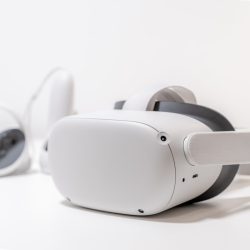
Apple is reportedly accelerating development on its long-rumored smart glasses, and multiple analyst reports from firms including Morgan Stanley and TF International Securities suggest the product could hit the market as early as 2027. If the speculation holds, this would mark Apple’s most ambitious entry into spatial computing since the Vision Pro — but in a form factor that could actually fit in your everyday life.
The core idea is deceptively simple: take everything Apple has learned from AirPods, the Apple Watch, and the Vision Pro, then compress it into a pair of lightweight glasses that look almost indistinguishable from regular eyewear. Analysts point to Apple’s aggressive patent filings around waveguide displays, bone-conduction audio, and ultra-low-power custom silicon as evidence that the company is solving the hardest engineering problems first.
What makes this different from the Vision Pro is accessibility. The Vision Pro is a remarkable piece of technology, but at $3,500 and with a design that still feels like strapping a computer to your face, it remains a niche product. Smart glasses, by contrast, could slot into the same ecosystem slot as AirPods — something you grab on your way out the door without thinking twice.
So what would Apple Smart Glasses actually do on a practical level? Based on supply chain reports and Apple’s existing product philosophy, here are the features most likely to define the experience.
First, contextual notifications delivered through a subtle heads-up display. Imagine walking through an airport and seeing your gate number and boarding time float gently in your peripheral vision, without pulling out your phone. Apple has already laid the groundwork with Live Activities and Dynamic Island; smart glasses would be the natural evolution of glanceable information.
Second, hands-free Siri interaction powered by on-device AI. Apple’s work on its in-house large language models and the A-series and M-series neural engines suggests a glasses product would lean heavily on local processing for privacy and speed. You could ask for directions, translate a menu in real time, or dictate a message — all without touching a screen.
Third, health and fitness tracking that goes beyond what the Apple Watch currently offers. Analysts have noted Apple’s interest in non-invasive glucose monitoring and advanced heart-rate sensors. Glasses sit close to the temples, which opens up possibilities for continuous biometric data collection that a wrist-worn device simply can’t match.
For developers, this represents a massive opportunity. Apple would almost certainly launch a dedicated SDK, much like it did with watchOS and visionOS. If you’re building apps today, start thinking about how your service could work in a glance-first, voice-first interface. A fitness app that delivers rep counts through audio cues, a navigation app that overlays arrows onto the real world, a language-learning tool that labels objects in your environment — these are the kinds of experiences that could define the platform.
There are also practical considerations for consumers to start thinking about now. Apple’s ecosystem lock-in is real, and smart glasses would deepen it. If you’re already invested in iPhone, AirPods, and Apple Watch, the glasses would tie everything together seamlessly. But if you’re on Android, this could be a reason to reconsider — or at least to watch closely, because competitors like Meta and Samsung are racing toward similar products.
Pricing is another factor worth watching. Analysts estimate a launch price between $800 and $1,200, positioning it above AirPods Max but well below the Vision Pro. That’s a sweet spot for early adopters and professionals who could justify the cost through productivity gains — think surgeons, engineers, or field technicians who need hands-free access to schematics and data.
The timeline matters too. A 2027 launch gives Apple roughly two more years of refinement, which is significant. The company has a history of entering markets late but executing with polish — the Apple Watch didn’t invent the smartwatch, but it redefined the category within three generations. Smart glasses could follow the same playbook.
Of course, challenges remain. Battery life in a slim form factor is still a hurdle, and Apple will need to navigate privacy concerns around always-on cameras and sensors in public spaces. Regulatory scrutiny is already intensifying around wearable recording devices, and Apple’s brand depends on trust.
Still, the trajectory is clear. Apple is building toward a future where computing moves off your desk, off your wrist, and onto your face — quietly, elegantly, and in a way that feels inevitable once you try it. If the analyst reports are even close to accurate, 2027 could be the year wearable computing finally lives up to the promise it’s been making for over a decade.
The smartest move right now? Stay informed, keep your Apple ecosystem current, and start imagining how a screen on your face would change the way you work, move, and connect. The future is closer than it looks — and it might be sitting right on your nose.