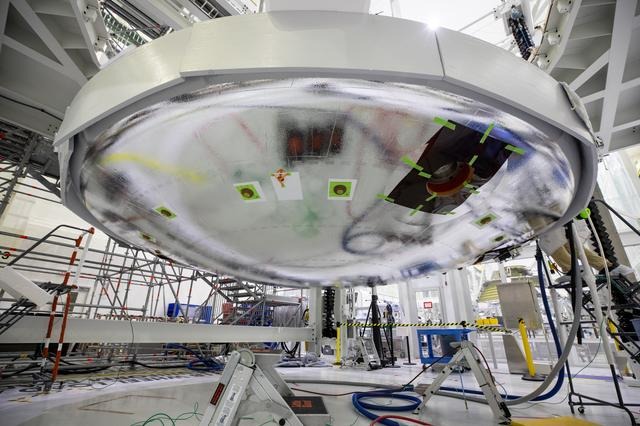
NASA’s Artemis II crew splashed down in the Pacific Ocean this week after completing the first crewed circumnavigation of the Moon since the Apollo era. The four astronauts—three Americans and one Canadian—spent ten days aboard the Orion spacecraft, travelling farther from Earth than any human has ventured in half a century before their successful re-entry and recovery off the coast of California.
The crew reported in excellent health and spirits upon recovery, describing their time in lunar orbit as “profoundly humbling” and “transformative.” Commander Reid Wiseman called the sight of Earth from the far side of the Moon “a perspective that no photograph can fully capture,” adding that the experience had deepened the crew’s commitment to the eventual goal of landing humans on Mars.
Mission control in Houston monitored every phase of the flight in real time, with only minor technical issues reported—none of which posed any risk to the crew. The Orion spacecraft reached a maximum distance of approximately 4,600 miles beyond the far side of the Moon, setting a new record for the farthest human spaceflight in history.
The Artemis II mission paves the way for Artemis III, which aims to put the first astronauts—including the first woman and first person of colour—on the lunar surface. That landing mission is currently scheduled for late 2027, though analysts caution that the timeline remains subject to the results of ongoing testing of SpaceX’s Starship lunar lander and Axiom Space’s next-generation spacesuits.
For those of us who follow space exploration from the road—whether working remotely from a café in Lisbon or a co-living space in Bali—the Artemis II mission represents something deeply inspiring. It is a reminder that humanity’s ambitions extend far beyond the boundaries of any single nation, and that the spirit of exploration is universal.
The Artemis programme, named after the twin sister of Apollo in Greek mythology, is designed not merely to revisit the Moon but to establish a sustained human presence there. NASA envisions a lunar Gateway station orbiting the Moon by the early 2030s, serving as a staging point for both surface missions and eventual crewed journeys to Mars.
One of the most remarkable aspects of the Artemis II flight was the diversity of its crew. Alongside Commander Wiseman, the mission included pilot Victor Glover—who will become the first person of colour to travel beyond low Earth orbit—mission specialist Christina Koch, who already holds the record for the longest single spaceflight by a woman at 328 days, and Canadian Space Agency astronaut Jeremy Hansen.
This diversity matters because it signals a new era in which space exploration is no longer the exclusive domain of a narrow demographic. For digital nomads and remote workers who value inclusion and global collaboration, the Artemis II crew composition feels like a reflection of the world we are building—one where talent and determination matter more than background.
The technical achievements of the mission were equally impressive. Orion’s heat shield endured re-entry temperatures of approximately 2,760 degrees Celsius, and the spacecraft’s navigation systems performed flawlessly throughout the ten-day journey.
Engineers at NASA’s Johnson Space Centre confirmed that all 16 parachutes deployed in sequence during the final descent, slowing the capsule from over 39,000 kilometres per hour to a gentle splashdown.
Looking ahead, the Artemis III landing will target the Moon’s south pole, a region believed to contain significant deposits of water ice. Access to water ice could enable the production of drinking water, breathable oxygen, and even rocket fuel—resources that would make long-term lunar habitation not just possible but practical.
For remote workers and travellers who dream of one day witnessing a lunar landing from Earth—or perhaps even participating in the industries that support it—the Artemis programme is a powerful reminder that the future is being written now. The Artemis II mission has proven that deep space travel is not science fiction; it is engineering reality.
As we continue to explore the planet from our laptops and mobile hotspots, it is worth pausing to appreciate the parallel journeys unfolding above us. The same curiosity that drives a digital nomad to book a one-way ticket to Medellín is the same force that propelled four astronauts around the Moon and back.
The Artemis II mission may be over, but its legacy is just beginning. With Artemis III on the horizon and Mars firmly in NASA’s long-term sights, the next decade promises to be the most exciting chapter in human space exploration since the 1960s.
Stay tuned, stay curious, and keep exploring—whether your frontier is a new country or the night sky above it.