# The Total Solar Eclipse of August 2026: Spain and Iceland Are Ready for Liftoff
For skywatchers and adventure travellers, August 12, 2026 promises something genuinely rare: a total solar eclipse with a path of totality crossing Iceland and northern Spain—two of Europe’s most dramatic and accessible destinations. And unlike previous eclipses that required journeys to remote Pacific atolls or polar regions, this one visits countries with proper tourism infrastructure, direct flights, and places to stay.
The eclipse’s path of totality stretches roughly 190 miles wide, crossing eastern Greenland, Iceland’s northern coast, and a strip of northern Spain that includes cities like Bilbao and Santander before reaching the Bay of Biscay at sunset. For those willing to travel, the window of totality ranges from under a minute in some locations to around two minutes in the optimal viewing zones in Iceland.
## Iceland: Where Fire Meets Ice Under a Darkened Sun
Iceland has been preparing for this moment for years. The country’s tourism industry, still riding the wave of post-pandemic growth, is treating the eclipse as a once-in-a-generation marketing opportunity.
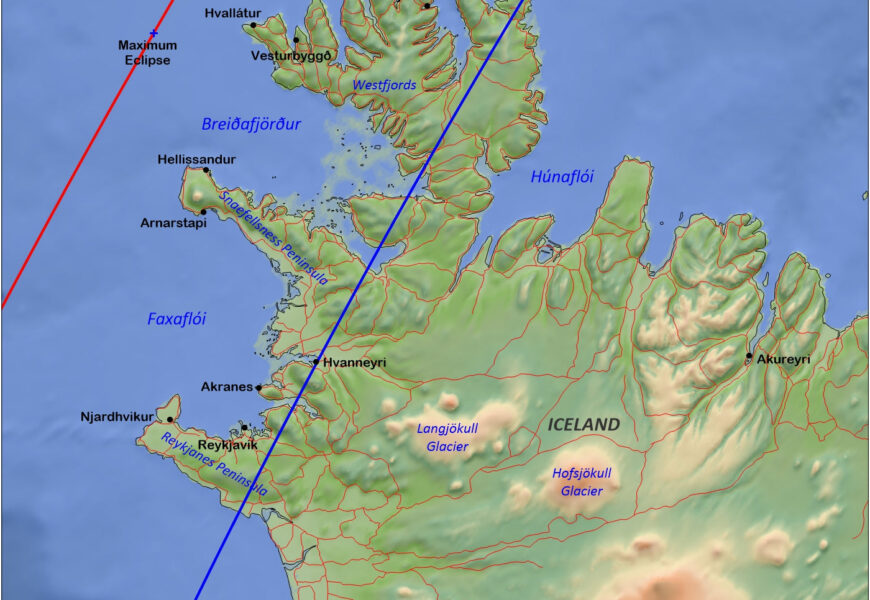
The Blue Lagoon—a geothermal spa that already appears on most visitors’ Iceland itineraries—has announced special eclipse viewing events. Other tourism operators along the Reykjanes Peninsula are planning gatherings that take advantage of Iceland’s otherworldly volcanic landscapes.
Reykjavik will experience a version of the eclipse, though those wanting the full totality experience need to be positioned along the northern coast or on the Westfjords peninsula. The good news is that August is peak season in Iceland—the weather is relatively mild and roads are fully accessible.
The challenge is that accommodation in prime viewing locations is filling fast, with operators in remote northern villages reporting booking rates not seen since the pre-pandemic tourism boom.
## Northern Spain: A Sunset Eclipse Over the Iberian Coast
The Spanish segment of the eclipse offers something different—a sunset totality that will colour the darkened sky over the Bay of Biscay in the moments before the sun drops below the horizon. For photographers and travellers who want to combine the eclipse with Spain’s world-class food, culture, and coastal scenery, this has become the more fashionable option.
The path of totality passes close enough to cities like Bilbao, Santander, and San Sebastián that visitors can base themselves in established tourism centres while making day trips to prime viewing spots along the coast. The region has invested heavily in recent years in infrastructure for international visitors, and the August timing means warm weather and long days that extend the travel window in both directions.
## Other Viewing Spots Worth Knowing
Outside the main path, parts of Portugal, southern France, and the Balearic Islands—including Mallorca and Ibiza—will see a deep partial eclipse. That might seem like a consolation prize, but for many travellers who cannot rearrange schedules to hit the exact totality band, a 90 percent partial eclipse can still be a striking experience.
Norway’s Svalbard islands also fall within the totality zone, offering an Arctic alternative for those willing to navigate remote logistics in exchange for potentially longer viewing windows. Some expedition cruise operators have already structured itineraries around the eclipse, giving passengers a chance to watch from the deck as the ship repositions along the path.
## What Travellers Need to Know Now
The consensus among eclipse chasers is simple: book now. The astronomical window is fixed, but tourism infrastructure is not infinite.
Iceland’s northern coast has limited accommodation, and the surge in demand driven by the eclipse has already pushed prices higher than the usual August peaks.
Travellers should also know that solar eclipse glasses are not optional—looking directly at the sun without proper protection can cause permanent eye damage. ISO-certified glasses are essential for any phase of the eclipse outside totality.
Those planning to photograph the event need solar filters for their cameras as well.
Whether you end up on an Icelandic lava field or a clifftop in northern Spain, August 12, 2026 will be the kind of travel story you end up telling for the rest of your life.